08 Jun
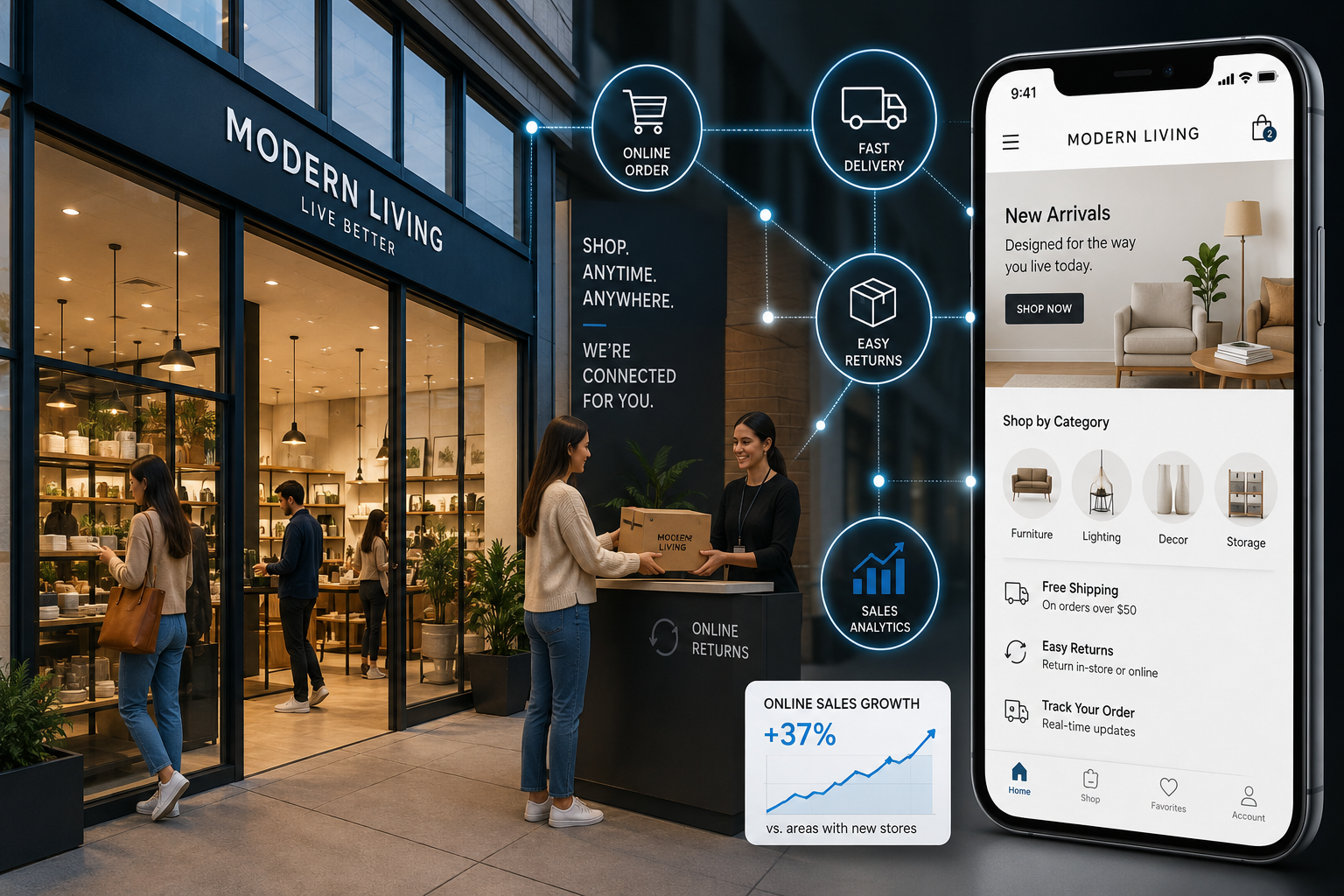
For years, the narrative around shopping was simple: the Internet was winning, and physical storefronts were declining. We were told that algorithmic recommendations and one-click delivery would completely replace traditional shopping.
Yet, a funny thing happened on the way to the retail graveyard. Digital-native brands—the ones born entirely online, like Warby Parker, began systematically establishing a physical presence. Far from a frantic stampede, commercial real estate data from firms like JLL shows this is a highly calculated, deliberate strategy. This company is opening physical storefronts not to abandon the internet, but to survive it.
Why would companies that mastered the digital space take on the overhead of leases, utilities, and store staff? It turns out that physical retail isn’t dead; it has just been reinvented.
The Storefront is a customer acquisition tool
To understand why brick-and-mortar still matters, you have to realize that a physical store’s primary job is no longer just to ring up sales. In a digital-first world, a storefront is actually a highly efficient marketing asset.
In the online world, the cost of getting your attention has been challenging. Customer Acquisition Cost (CAC)—the money a brand spends on social media ads, search engine marketing, and influencer partnerships to acquire one paying customer—has skyrocketed.
E-commerce brands find themselves trapped on a digital treadmill. Because online visibility relies strictly on paid ad distribution, this is an assumption I would challenge, what about SEO, or free social media marketing?, the moment a company scales back its digital ad spend, its search rankings, social feed placement, and web traffic plummet almost instantly.
This is where the physical world offers a massive shortcut known as the “Halo Effect.”
A landmark study by the International Council of Shopping Centers (ICSC), titled The Halo Effect: How Retail Stores Drive Digital Growth, tracked billions of dollars in transactions and discovered a striking pattern: when a retail brand opens a physical store in a specific neighborhood, online traffic and digital sales from that exact zip code spike by an average of 37%.
Fixing E-Commerce’s Dirty Secret: The Return Crisis
There is another massive financial puzzle that physical stores solve, and it involves something most shoppers don’t think about: reverse logistics : the process of moving goods from the customer back to the seller.
Online shopping has a structural profitability problem. Data from the National Retail Federation (NRF) reveal that while brick-and-mortar return rates hover around a manageable 8% to 10%, online return rates routinely skyrocket to between 20% and 30%.
Processing an online return is a financial nightmare for brands. It involves paying for return shipping, paying warehouse staff to open and inspect the package, repackaging the item, or worse, writing it off as a loss because restocking costs more than the item is worth.
Physical stores completely rewrite this equation by serving as localized return hubs.
- Eliminating Friction: When a customer returns an online order directly to a local store, the brand saves the shipping cost.
- Immediate Restocking: The item can be inspected on the spot and put right back onto the sales floor within minutes.
- The Upsell Opportunity: Data shows that a significant percentage of consumers who walk into a store to return an item end up buying something else before they leave. What was a financial loss online transforms into a brand-new sale in person.
Case Study: The Amazon and Whole Foods Integration
Nowhere is the solution to the online return crisis more obvious than in Amazon’s clever use of Whole Foods Market. By allowing customers to drop off returns completely box-free and label-free, Amazon quietly turned hundreds of upscale grocery stores into a highly efficient neighborhood returns network. This single move perfectly illustrates how physical infrastructure can rescue a digital business from its most expensive habit.
This partnership allows Amazon to leverage its massive e-commerce scale to drive physical foot traffic while absorbing its heavy reverse logistics costs. Traditionally, an online return is a financial nightmare because the company has to pay a mail carrier to ship a single, lightweight box across the country. Whole Foods eliminates this friction. Amazon consolidates thousands of loose, unboxed items directly at the store, packages them together, and ships them out all at once in bulk cargo trucks—saving a fortune on its multi-billion-dollar annual shipping bill.
More importantly, this logistics play acts as a powerful driver of new revenue through immediate cross-selling. Bringing customers into Whole Foods to drop off a package creates a massive wave of “micro-visits”—trips to the store lasting less than five minutes. A shopper walks in to return an unwanted online order, avoids the hassle of taping up a box, and impulsively grabs fresh produce, a quick snack, or a carton of milk before leaving. By making the digital return effortlessly convenient, Amazon uses high-margin grocery basket revenue to subsidize the costs of the online return. This strategy integrates online shoppers into the physical storefront ecosystem, building long-term, omnichannel loyalty.
However, this strategy is not without its trade-offs. While it solves a massive digital headache, it can introduce a hidden profit drag by creating in-store disruptions. Flooding a quiet, high-end supermarket with waves of non-grocery shoppers can heavily congest store aisles, strain customer service desks, and occasionally frustrate core organic shoppers who are paying a premium price for a relaxed, high-end retail experience.
Ultimately, the Amazon and Whole Foods model proves that the absolute best way to optimize expensive digital logistics is to anchor them in physical infrastructure. Physical storefronts don’t just hold inventory anymore—they act as a vital safety net that keeps the digital world profitable.
The Shift From Distribution to Experience
Because products can be bought anywhere at any time online, the physical store has shifted its focus from distribution to experience.
Modern retail stores are no longer designed to hold maximum inventory on crowded shelves. Instead, they are built to maximize engagement, community, and sensory trust.
Because products can be bought anywhere at any time online, the physical store has shifted its focus from distribution to experience. Modern retail stores are no longer designed to hold maximum inventory on crowded shelves. Instead, they are built to maximize engagement, community, and sensory trust.
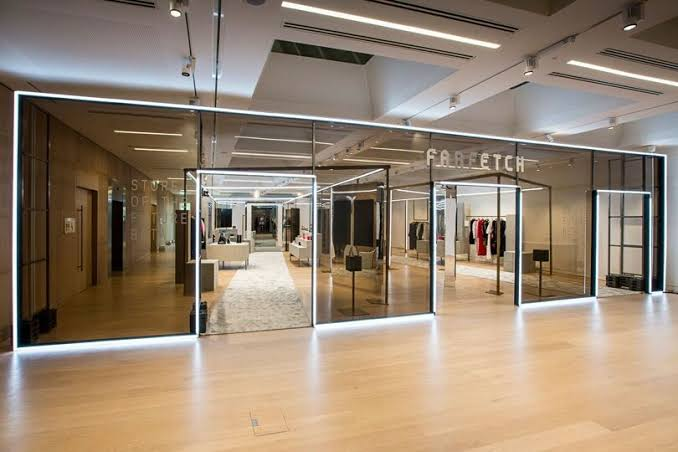
Consider the real-world pioneering tech storefronts introduced by luxury fashion networks. For example, e-commerce platform Farfetch launched its “Store of the Future” concept at the Browns East boutique in London.
Farfetch introduced this physical innovation space in London to test retail technology. Instead of packed clothing racks, the store utilized connected apparel racks, touch-screen smart mirrors, and digital sign-ins to link a customer’s online browsing data with their physical, in-store experience. It proved that modern brick-and-mortar is a curated, interactive space rather than a simple warehouse.
Instead of cluttered clothing racks, minimalist layouts focus entirely on curation. This setup encourages shoppers to interact with the brand, touch the fabrics, and experience the lifestyle behind the products. You don’t go there just to grab an item off a shelf; you go there to validate the brand in real life.
The New Retail Rule: Efficiency vs. Emotion
To thrive in the modern landscape, brands have to stop treating physical and digital channels as clones of each other. Instead, successful retailers recognize that they must design for two entirely different psychological states.
This brings us to the ultimate operational framework for modern commerce:
🌟 The New Retail Rule: Online shopping is highly transactional and built for convenience. Physical shopping is highly emotional and built for connection.
When a consumer logs onto an e-commerce site, they are typically on a mission. It is an exercise in efficiency—filtering by size, comparing price points, and checking out with a single click. Digital commerce is built for logic; it excels when a shopper already knows what they want and simply needs to acquire it with the least amount of friction.
But human beings are not purely transactional creatures. While efficiency builds habit, it rarely builds deep brand loyalty. If a customer buys from you online solely because you are the fastest or the cheapest, they will leave the moment a faster or cheaper competitor appears.
Physical shopping satisfies our fundamental need for sensory validation and human experience:
- The Sensory Trust Factor: Consumer insights from PwC confirm that the primary motivation for visiting a physical storefront remains the desire to “touch, weigh, and compare products first-hand.” Brick-and-mortar provides immediate physical confirmation that a fabric, fit, or material matches its online promise.
- The Human Element: An algorithm can tell you what other users “frequently bought together,” but it cannot offer genuine reassurance. Retail frameworks from McKinsey & Company highlight that high-touch human interaction—like specialized store associates and stylists—provides “confidence, discretion, judgment, and reassurance.” McKinsey’s research reveals that this human layer prevents a brand from being “flattened into dry attributes” online, serving as the exact space where true customer loyalty is won or lost.
Ultimately, if a brand only exists online, it risks becoming a mere utility—a replaceable icon on a smartphone screen. By transforming the physical storefront into an emotional touchpoint, retail ceases to be a chore and becomes an experience. You don’t enter the store just to buy an item; you enter to participate in the brand’s world.
